

Self-Driving Taxi Services are Expanding Rapidly in Metro Phoenix and San Francisco
Autonomous technology is developing at a rapid rate, and many vehicles currently on US roadways have autonomous driving features. The introduction of driverless ride-hailing services has revolutionized the transportation industry, providing passengers with a convenient way to travel without the need for a human driver. The demand for self-driving taxi services has experienced a significant surge in popularity, particularly in densely populated metropolitan areas, such as Phoenix and San Francisco.
In these locations, two prominent driverless ride-hailing services, Cruise and Waymo, have emerged as industry leaders, spearheading the remarkable growth of this thriving industry.
What is an Autonomous Car?
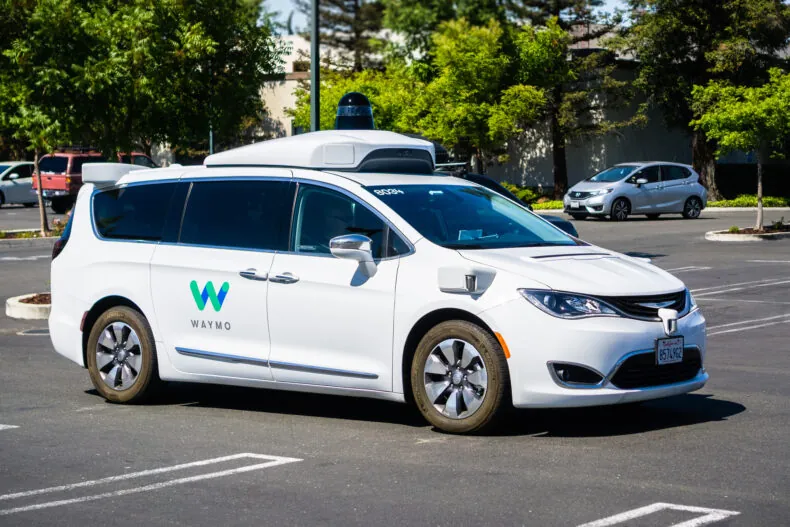
Autonomous vehicles or driverless cars have advanced sensors and technology that allow them to operate without human involvement. Therefore, these vehicles are considered “driverless” because there is no need for a human driver to be present in the vehicle. Driverless cars can travel where traditional cars go and accomplish tasks performed by experienced drivers. For example, the Waymo car can navigate roads autonomously using advanced sensors and self-driving technology.
The Growing Industry of Driverless Taxis
The driverless taxi service industry is just gaining momentum. The Insurance Institute for Highway Safety forecasts that we’ll see about 3.5 million self-driving or semi-autonomous vehicles on US roads by 2025.
Waymo One, “the world’s first autonomous ride-hailing service,” is doubling its service area in Phoenix, AZ. This expansion will include Scottsdale, cover almost all of Tempe, and allow Waymo One to serve 180 square miles of The Valley. In San Francisco, Waymo will keep expanding its driverless ride-hailing service, including more areas like North Beach and Fisherman’s Wharf.
In April of this year, Cruise announced that their driverless service is available across all of San Francisco. In 2022, Cruise initially launched its services in Austin, TX, and Phoenix, AZ.
What Is the Difference Between Self-Driving Cars and Autonomous Cars?
The terms “self-driving cars” and “autonomous cars” are often used interchangeably, but there are subtle differences between the two. Self-driving cars generally refer to vehicles that can typically operate without human input, but a human passenger must always be present and ready to take control.
On the other hand, autonomous cars encompass a broader concept, including both self-driving cars and vehicles that can operate in a controlled environment without human intervention. These vehicles utilize advanced sensors, software, and artificial intelligence to navigate the road and interact with the environment.
How Do Self-Driving Cars Work?
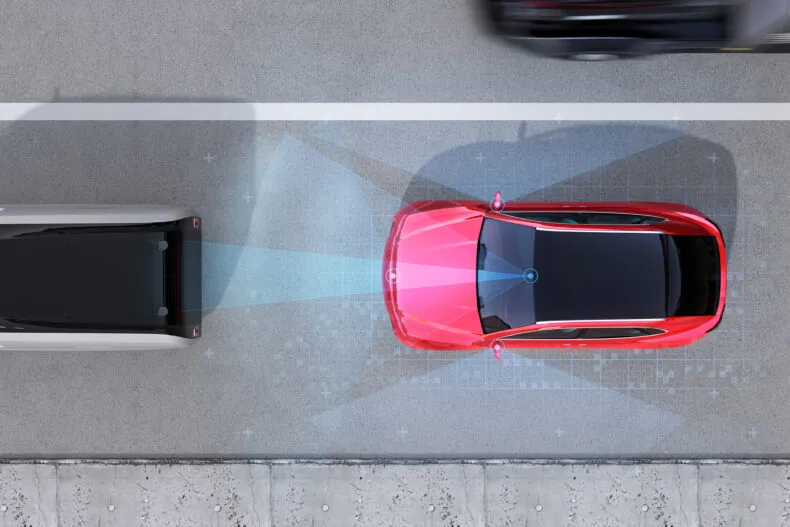
Autonomous cars map out their surroundings and utilize radar sensors to monitor the positions of nearby vehicles. Additionally, autonomous vehicles rely on other technology including actuators, intricate algorithms, machine learning systems, and powerful processors to effectively execute their software. Driverless vehicles also employ video cameras to detect traffic lights, read road signs, monitor other vehicles, and identify pedestrians. Ultrasonic sensors are also integrated into the wheels that detect curbs and nearby vehicles. Additionally, Light Detection and Ranging (LiDAR) sensors emit pulses of light to gauge distances, detect road boundaries, and recognize lane markings.
After the sensory inputs are received, the data is gathered and processed by sophisticated software that plots a path and communicates the instructions to the vehicle’s actuators. The actuators are responsible for managing acceleration, steering, and braking.
To ensure that driverless cars adhere to traffic rules and successfully navigate obstacles, the software relies on a combination of hard-coded rules, obstacle avoidance algorithms, predictive modeling, and “smart” object discrimination, which enables it to distinguish between different types of vehicles such as cars and motorcycles.
Levels of Automation for Self-Driving Cars
The Society of Automotive Engineers (SAE) has established 6 levels of driving automation, that are recognized and adopted by the U.S. Department of Transportation. The levels of automation include the following:
Level 0 – No Driving Automation
At Level 0, the vehicle is manually controlled and there is no driving automation available. This means that the vehicle operates entirely under human control, so there aren’t automated systems to take over or assist with driving tasks. The driver is responsible for all aspects of driving, including acceleration, braking, and steering.
Level 1 – Driver Assistance
Level 1 represents the lowest level of automation. Vehicles with driver assistance systems can aid the driver with specific tasks, such as maintaining a fixed speed. For example, cruise control allows the driver of the vehicle to maintain a set speed and distance from the vehicle ahead. However, the driver must stay alert and engaged, because these systems do not provide complete control over other driving functions like braking and steering.
Level 2 – Partial Driving Automation
At Level 2, the vehicle can control multiple driving functions, such as steering and acceleration, under certain conditions. However, the motorist must still be actively monitoring the driving environment and be ready to take over control, when necessary. For example, advanced driver assistance systems (ADAS) like Tesla’s Autopilot qualify as Level 2.
Level 3 – Conditional Driving Automation
Level 3 vehicles have “environmental detection” capabilities, which means they can make informed decisions and manage most aspects of driving. However, the driver must be prepared to take control when alerted by the system. Level 3 vehicles are equipped with advanced sensors and software that enable them to handle various driving tasks independently, but these vehicles still may require a human override.
Level 4 – High Driving Automation
Level 4 vehicles are capable of operating autonomously in most driving scenarios without any human intervention. These vehicles can operate in self-driving mode, monitor the road environment, and intervene if there is a system failure or road hazard. However, Level 4 automation is limited to specific geographic areas and virtual boundaries, known as geofencing. In situations outside these defined boundaries, the vehicle will likely require human intervention.
Level 5 – Full Driving Automation
At Level 5, vehicles are fully autonomous, operating without any human intervention. These kinds of vehicles are designed to perform all driving tasks and are capable of making choices without human input. These vehicles utilize advanced sensors, algorithms, and artificial intelligence to navigate complex road scenarios, interact with traffic, and handle various driving challenges, enabling passengers to travel without any driver involvement.
Do Driverless Vehicles Cause Fewer Accidents?

One of the potential benefits of driverless vehicles is their potential to reduce accidents on the road. With advanced sensors, cameras, and sophisticated algorithms, driverless vehicles can theoretically react faster and more accurately to potential hazards than human drivers. They have the ability to constantly monitor the surroundings, anticipate risks, and make split-second decisions.
Additionally, driverless vehicles are not prone to human errors such as distracted driving, fatigue, or impaired judgment. According to the National Highway Traffic Safety Administration, about 94% of serious crashes are caused by human error. While the goal is to improve road safety, it’s important to note that the technology is still developing, and comprehensive real-world testing and regulatory frameworks are necessary to ensure the safety and reliability of driverless vehicles.
According to recent data, Waymo’s cars were involved in 2 crashes over 1 million miles driven. There have also been 18 “minor contact events,” but Waymo says that 55% of these involved another motorist colliding with a stationary Waymo vehicle.
Contact Experienced Auto Accident Lawyers Today
Were you involved in an accident that involved a self-driving taxi, car, or truck? Navigating the legal complexities surrounding self-driving vehicle accidents requires a deep understanding of emerging laws and regulations in this rapidly evolving industry. Alpha Accident Lawyers is an award-winning personal injury law firm specializing in auto accident cases including car accidents, truck accidents, bicycle accidents, rideshare accidents, motorcycle accidents, and pedestrian accidents.
Our personal injury lawyers maintain a 99% success rate and have recovered millions of dollars in compensation for our clients and their families. Don’t hesitate to contact an experienced auto accident lawyer to discuss your case and explore your legal options. Schedule a free consultation today.
![Renee Gonzalez Killed in Pedestrian Accident on Highway 199 [Springtown, TX]](https://alphaaccidentlawyers.com/wp-content/uploads/2023/11/iStock-1472245535-1-720x480.jpg.webp)